Committee profile
Key room details for delegates.
- Room Size
- Single Delegation
- Level
- Advanced
- Procedure
- Differing Rules
SSUNS 2026 • Montréal

Specialized Agencies
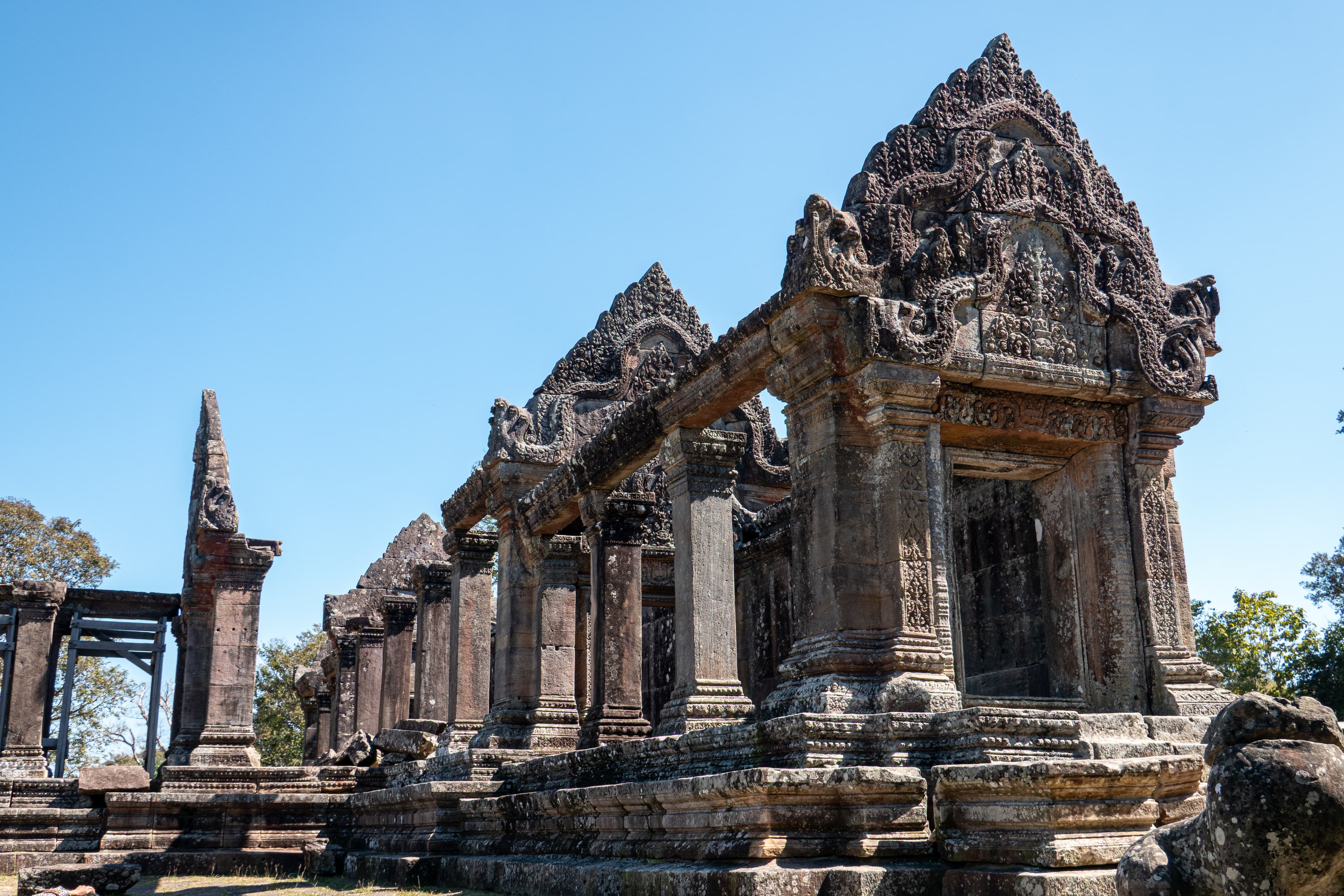
Temple of Preah Vihear (Cambodia v. Thailand).
Committee profile
Key room details for delegates.
Delegate documents
Essential links for preparing this committee.
Due to the uniquely complicated nature of an ICJ, your Dais has provided this additional guide to the Rules of Procedure.
Resources
Committee resources will be added here as they are released.
Use this committee's form to submit your position paper.
Background Guide
This committee's background guide is now available. Use the password provided by your faculty advisor if prompted.
Contact
If you have questions, please contact Eitan Pessin at spec@ssuns.org.
At The Hague, history and law collide over a centuries-old temple perched atop the Dangrek Mountains. Cambodia and Thailand stand before the International Court of Justice in a dispute over the sovereignty of the Temple of Preah Vihear, an ancient Khmer sanctuary that has become a flashpoint of nationalism, diplomacy, and international law. Colonial-era maps, contested borders, and decades of political tension will face judicial scrutiny as the Court weighs the legal status of the territory and the authority of past decisions. The dispute begins with jurisdiction. Thailand challenges the Court's authority to hear the case at all, citing the dissolution of the Permanent Court of International Justice in 1946 and disputing whether its prior declarations carry forward to the ICJ. Delegates must grapple with what it means for a state to accept the jurisdiction of an international court, and whether procedural arguments can shield a state from legal accountability. At the center of the case sits the Dangrek Map, produced during the French colonial administration of Cambodia. Thailand argues that receiving a map does not constitute consent to the borders it draws. Cambodia argues that decades of silence amount to acquiescence. The doctrines of acquiescence and estoppel will be tested rigorously here. Did Thailand's failure to challenge the map, including the symbolic visit of Prince Damrong to the temple under French administration in 1930, constitute an implied acceptance of Cambodian sovereignty? Or does the power asymmetry of the colonial era make applying these doctrines structurally unjust? Delegates will also weigh what actually establishes sovereignty over disputed land. Cambodia points to cultural and religious ties stretching back centuries. Thailand points to physical administration of the territory, including the posting of guards and performance of state functions, drawing on precedents from the Island of Palmas and the Minquiers and Ecrehos cases. The Court must determine whether a symbolic connection or a physical administration carries greater legal weight. This committee functions as a simulation of the ICJ proceedings. Delegates represent the legal teams of Cambodia and Thailand, as well as the Court itself. Arguments will be built on case law, treaty interpretation, and the foundational principles of international law. The decisions reached here will not only resolve a bilateral dispute; they will shape how international law approaches colonial-era borders, the limits of state consent, and the reach of judicial authority for years to come.